Training Guide 01
AI Chat — every major AI model, one box
AI Chat is the tool you'll open most. It answers questions, writes and rewrites, reads your documents and websites, looks at your images, and produces code — and you choose which AI model does the work, question by question. This guide takes you from your first message to the details most people never find.
01 Before you start
Thirty seconds of context that makes the rest of the guide obvious.
AI Chat sits at the top of your left sidebar, right under Dashboard. Everything you do in it is saved to your account automatically — you never have to remember to press save.
💬What it's for
Questions, writing, rewriting, summarising, planning, analysis, translation, code — anything you'd type to an assistant.
🎛️What makes it different
You're not locked to one AI. Switch between models from OpenAI, Google, Anthropic and xAI with one click, mid-conversation.
📎What it can read
Your documents, any public website, images you upload, and live results from the web — not just the text you type.
The list of models you can pick from depends on your plan. If a model named in this guide isn't in your list, it's available on a higher plan — everything else works exactly the same.
02 The screen, explained
Three areas. Most people never explore the third one, which is where the power is.
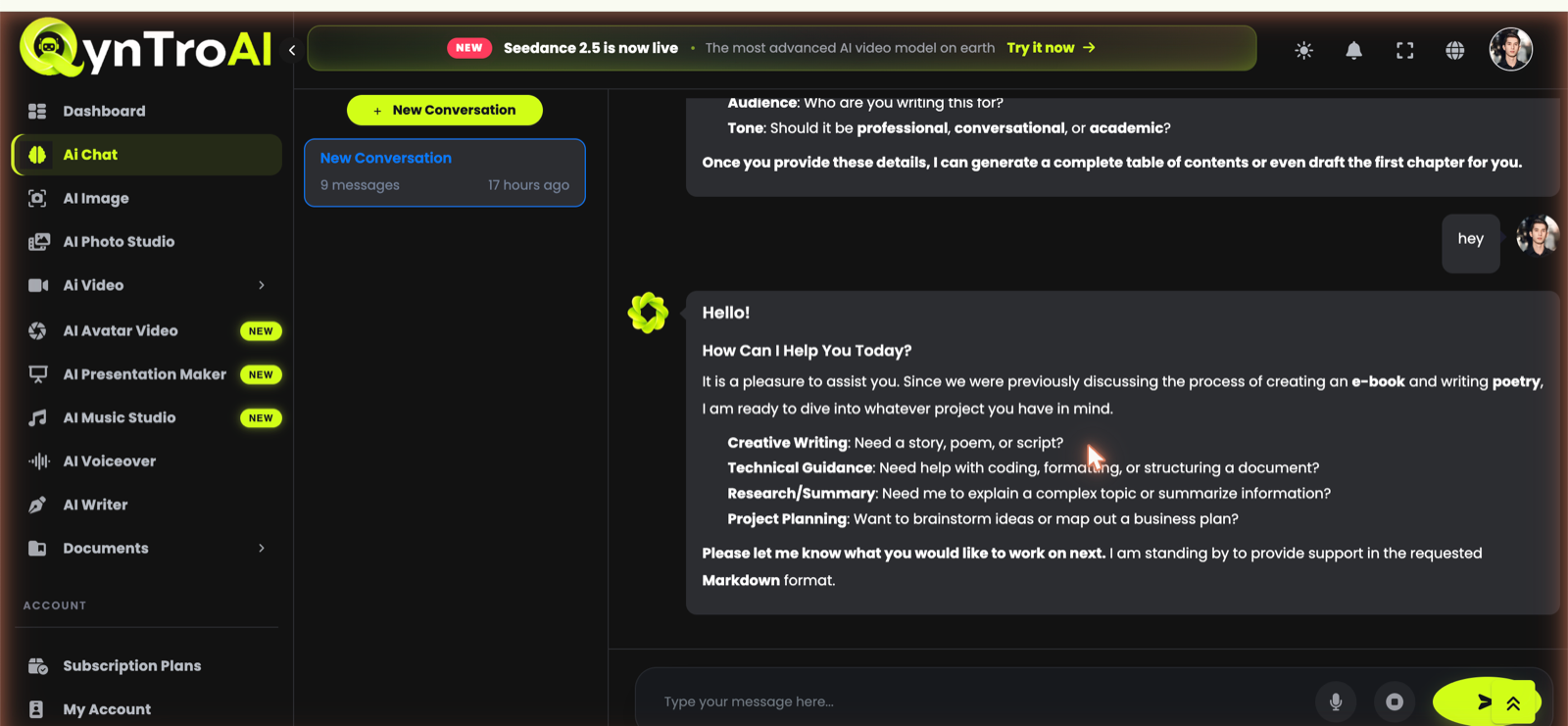
-
Conversation list — left
Every chat you've had, newest first, with its message count and when you last touched it. Click any one to reopen it exactly where you left off. + New Conversation starts a fresh one, and the Search box above it finds an old conversation when the list gets long.
-
The thread — middle
Your messages and the AI's replies. Answers arrive word by word as they're written, so you can start reading before the reply is finished. Above the thread you'll find the Real-Time Data toggle and the export menu — both covered below.
-
The composer — bottom
The message box, the microphone, and — underneath it — the model picker and four buttons: Document, Website, Image and Code. This row is the difference between a chatbot and a working tool.

03 Your first conversation
Ask, read, refine. The refining step is the one that matters.
-
Start a new conversation
Click + New Conversation. A conversation is a workspace for one topic, not a single question.
-
Type your request and press Enter
Write 5 Instagram captions for a new vitamin C face serum. Fun, not salesy. -
Refine instead of restarting
Don't retype your request to change something. Just say what's different:
Make caption 3 shorter and add a call to action.The chat remembers everything above, so it knows what "caption 3" means. This back-and-forth is how you get from a decent answer to the right one — usually in two or three turns.
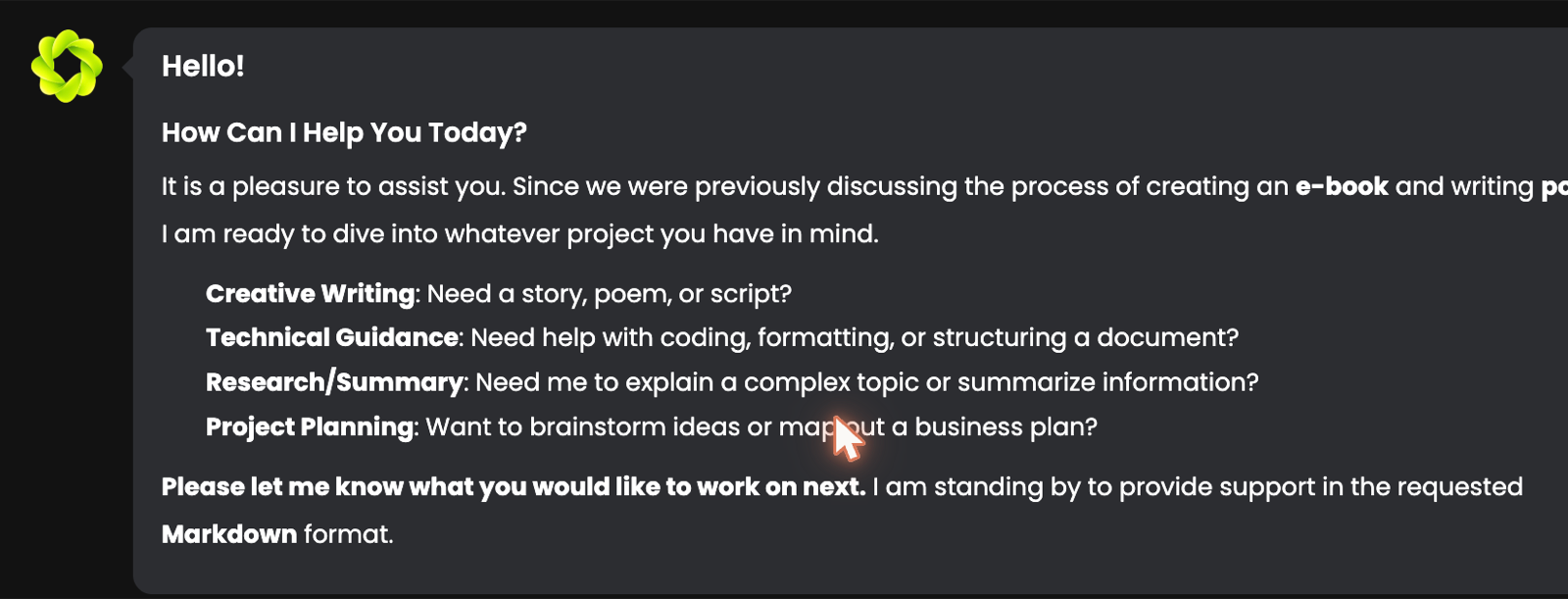
One topic, one conversation. When you move to something unrelated, start a new one. Your answers get sharper, your history stays findable, and — as the next section explains — it costs you less.
04 Choosing the AI model
The single most useful control on the page, and the one most people never touch.
Under the message box you'll see Select AI Model and the name of the model currently in use. Click it and the list opens, grouped by the company that built each model — OpenAI, Google, Anthropic and xAI. No extra subscription, no separate login, no copying work between tools.
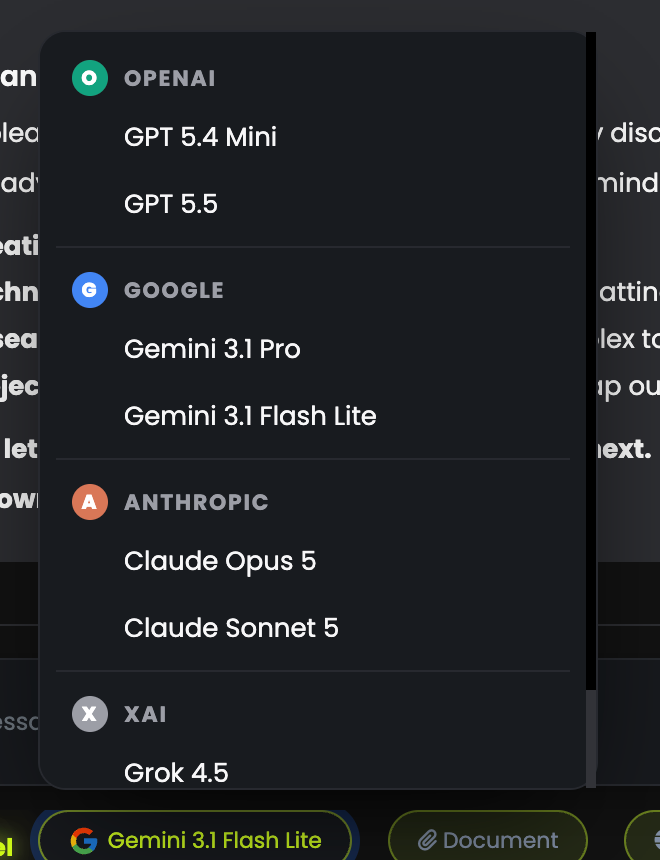
Think in three groups
| Group | Models | Reach for it when… |
|---|---|---|
| Fast | Gemini 3.1 Flash Lite GPT 5.4 Mini |
Everyday work — rewrites, summaries, quick questions, brainstorming, first drafts. Genuinely good, and the reason your credits last. |
| Balanced | Grok 4.5 Gemini 3.1 Pro |
The task involves reasoning — planning, analysis, comparing options, working through a problem in steps. |
| Best | Claude Sonnet 5 Claude Opus 5 GPT 5.5 |
Work with your name on it — long-form writing, client proposals, tricky code, anything where nuance shows. |
Generate your options with a fast model. When one is close, switch to Claude Sonnet 5 or Opus 5 and say "polish this." You pay the premium rate only for the final pass, which is a fraction of the words. Switching mid-conversation keeps all the context.
When an AI company releases a new model, we add it to QynTro — usually within days. You don't pay extra and there's nothing to install; it simply appears in this list.
05 How chat is charged
Three facts that put you in control of your balance.
AI Chat runs on word credits — the same pool AI Writer uses, topped up every month when your plan renews, and shown at the top right of the page. It's a separate pool from media credits (images and video), characters (voiceover) and minutes (transcription), so running low on one doesn't stop the others.
-
You're charged for both directions
The question you send and the answer you get back both count — and the answer costs several times more per word. Asking for a 2,000-word article is a much bigger spend than asking a long question.
-
The model changes the price dramatically
Premium models cost many times more per word than fast ones for the same answer. That's not a reason to avoid them — it's a reason to use them on purpose.
-
Long conversations get more expensive with every message
This is the one nobody expects. Each time you send a message, the AI re-reads the entire conversation to stay in context. Message thirty costs far more than message one — even if both are short.
Start a new conversation when you change topic. The answers get more accurate (no unrelated context to distract the model), your history stays organised, and your credits go considerably further.
06 Real-Time Data
Switch this on when the answer depends on what's true today.
Above the thread, on the right, there's a Real-Time Data switch. Leave it off and the AI answers from what it already knows. Turn it on and it can pull in current information from the web before answering.
✅Turn it on for
News, prices, "what's happening with…", recent product launches, anything dated, anything that changed this year.
⏹️Leave it off for
Writing, rewriting, brainstorming, summarising a document, code. Most work doesn't need it — and it's faster without.
Real-time results come from public web pages, and web pages can be wrong or out of date. For anything that matters — a price, a legal date, a statistic you're about to publish — confirm it at the source before you use it.
07 Chat with your documents
Word, PDF and CSV files — attach once, then ask as much as you like.
Click Document under the message box and QynTro opens AI File Chat — a dedicated workspace for talking to your files. It has its own conversation list, so each document keeps its own thread and your main chat stays untouched.
Click + Upload Document
Word, PDF or CSV. Contracts, briefs, reports, invoices, research papers, exported spreadsheets.
-
Ask your first question
Summarise this in 5 bullet points and list any deadlines. -
Keep asking — the document stays loaded
What are the risks in this contract? · Draft a reply accepting clause 3 but pushing back on the payment terms. · Pull out every number and put it in a table.
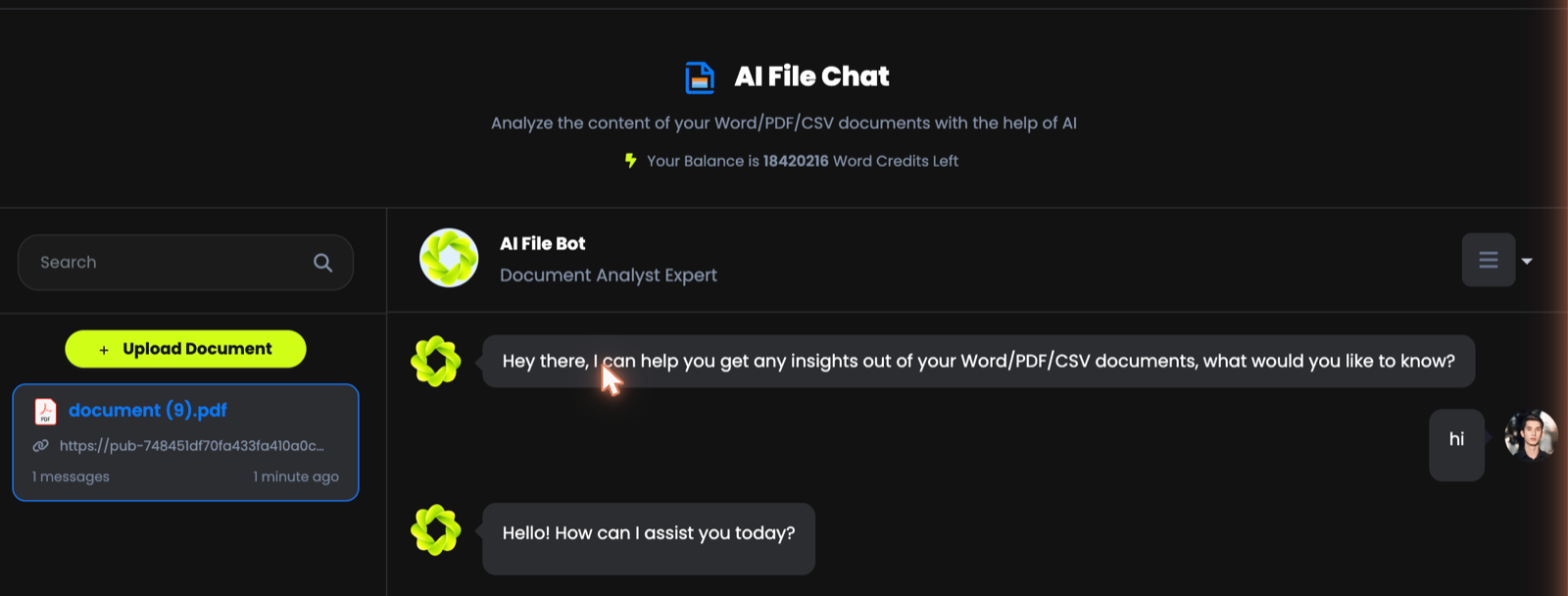
Pasted text becomes part of the conversation and gets re-read with every following message. An uploaded document is handled far more efficiently — cheaper, and it stays available for the whole thread.
08 Chat with a website
Point the chat at any public page and interrogate it.
Click Website, give it a URL, and the chat reads that page. It works on competitor product pages, news articles, pricing pages, job listings, documentation and long blog posts — and like File Chat, it keeps its own conversations.
Paste a competitor's page and ask "what are they promising, and what are they carefully not saying?" You get a positioning brief in about ten seconds.
09 Chat with an image
The AI can see. Upload a picture and ask anything about it.
Click Image and upload a photo, screenshot, chart, product shot, handwritten note or scanned page. Then ask.
🔍Describe
"What's in this image? Write alt text for it."
✍️Extract
"Type out all the text in this photo."
📊Interpret
"What does this chart show? What's the trend?"
🎯Critique
"What's wrong with this design? Give me 3 fixes."
Screenshot your own landing page and ask for an honest critique before a client gives you one.
10 Code mode
You don't need to be a developer to get value here.
Click Code and describe what you need in plain English. The answer comes back in a proper code block with syntax highlighting, and a copy button appears when you hover it — so you get clean code on your clipboard without the explanation around it.
Spreadsheet formulas, a WordPress snippet, a bit of automation, a fix for an error you don't understand — describe the outcome you want and paste the result where it needs to go.
11 Voice input
Talk instead of typing.
Tap the microphone in the message box and speak. Your words are transcribed into the box, where you can edit them before sending. It's usually faster than typing — especially on a phone — and it's ideal for thinking out loud about a problem.
Voice transcription draws on your minutes allowance, not word credits. It's a separate budget, so using voice input doesn't eat into your chat allowance.
12 Getting your work out
Copy keeps your formatting. Export saves the whole conversation.
Copy a single answer
Hover any reply and click copy. Paste it into Google Docs, Word or an email and the headings, bold text and bullets come across already formatted — no asterisks, no hash symbols, no cleanup step. Copy a code block instead and you get clean plain code, because that's what an editor needs.
Export the whole conversation
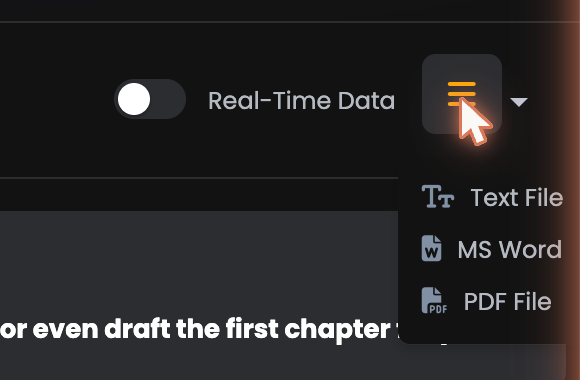
You're never locked in. Open the menu at the top right of the chat and you can save the entire conversation in three formats.
📋Text File
Plain text. Paste anywhere, no formatting in the way.
📝MS Word
For editing further or dropping into a report.
📄PDF File
For sharing, sending to a client, or archiving.
13 Managing your conversations
A tidy list is a useful list.
- Everything saves automatically. Close the tab mid-answer and it'll be waiting for you.
- Search finds old work. Use the search box above the conversation list once you have more than a screenful.
- Delete the throwaways. A short list you can scan is worth more than a complete archive you can't.
- Reopen and continue. Last week's conversation still has all its context — pick up mid-thought.
14 Prompting that actually works
These three habits change your results more than the model you pick.
-
Give it a role
Starting with who the AI should be sets the vocabulary, the assumptions and the tone.
You are a skincare copywriter who writes for millennial buyers… -
Give it the details
Audience, tone, length, format. Four short phrases do more than one long sentence.
-
Correct, don't restart
When the answer isn't right, say what to change. The second attempt is almost always the good one.
Shorter. Less formal. Keep the last line — that one works.
The same request, two ways
Vague — bland answer
Specific — usable answer
- Say who it's for
- Say how long it should be
- Say what tone to use
- Say what format you want back — list, table, email, paragraphs
- Say what to avoid
15 Troubleshooting & FAQ
The questions we're asked most.
A model I saw in this guide isn't in my picker
The models available to you depend on your plan. Higher plans include the premium models. Everything else in AI Chat works identically on every plan.
My credits are going down faster than I expected
Two usual causes. First, a very long conversation — the whole thread is re-read on every message, so late messages cost much more than early ones. Start a new conversation when you change topic. Second, a premium model on routine work — switch to a fast model for drafts and everyday questions, and save the premium models for the final pass.
The answer stopped halfway through
Ask it to continue — just type "carry on from where you stopped". For very long output, it's better to ask section by section: you get better quality and you can correct course before the whole thing is written.
Where did my uploaded document go?
Document opens AI File Chat, which keeps its own conversation list — separate from your normal chats. Your document and its thread are in there, not in the main AI Chat list.
The AI doesn't know about something recent
Turn on Real-Time Data above the thread and ask again. Without it, the model answers from what it already knew.
The answer isn't what I wanted
Don't start over — tell it what's wrong. "Too formal", "too long", "you missed the part about shipping", "give me three more like the second one". Correcting is faster than re-prompting and it keeps the parts you liked.
Is my conversation private?
Your conversations belong to your account and are visible only to you (and to your team members if you've invited them). Export or delete any conversation at any time.